
Power from the day.For later.
Your solar panels generate electricity. A home battery can store some of it so you can use that electricity later. The available options depend on the model and your situation.
What the battery does
Generate by day
Your solar panels produce electricity during the day.
Store the power
The extra energy is stored in your home battery.
Use it in the evening
Use stored solar power later, depending on the capacity and features of the model you choose.
A battery does not make you independent by default
A home battery stores electricity and releases it later. That does not automatically make your home independent from the grid or keep the power on during an outage. Backup only works when the chosen model and installation support it.
Inverter, meter and control
A home battery is more than cells. Three parts decide how it works with your home.
AC-coupled, next to your panels
Most batteries in the shop are AC-coupled. They connect to your home's AC power, not to the DC side of your solar panels. The inverter in the battery turns AC into DC to charge the cells, and back again when your home asks for power.
Meter and control
A battery needs to know what your home uses. It reads a meter for that, and with the Marstek Venus E 3.0 with P1 that is the CT003 P1 meter in the box. In self-consumption mode the Marstek supplies power as soon as the meter sees consumption and charges as soon as it sees feed-in. Other models have their own working modes, such as self-use, time-of-use or dynamic tariff on the TSUN. The meter options per model are in the datasheet.
Socket or fixed connection
Plug-and-play models go into a socket and deliver 800 W to the grid by default. A fixed connection runs through a dedicated circuit in the meter cupboard and is often work for an electrician. With installation on a dedicated circuit the power to the grid can be higher, depending on the model.
Which battery fits your house?
Every home is different. Choose the battery that matches your energy needs, space and future plans.
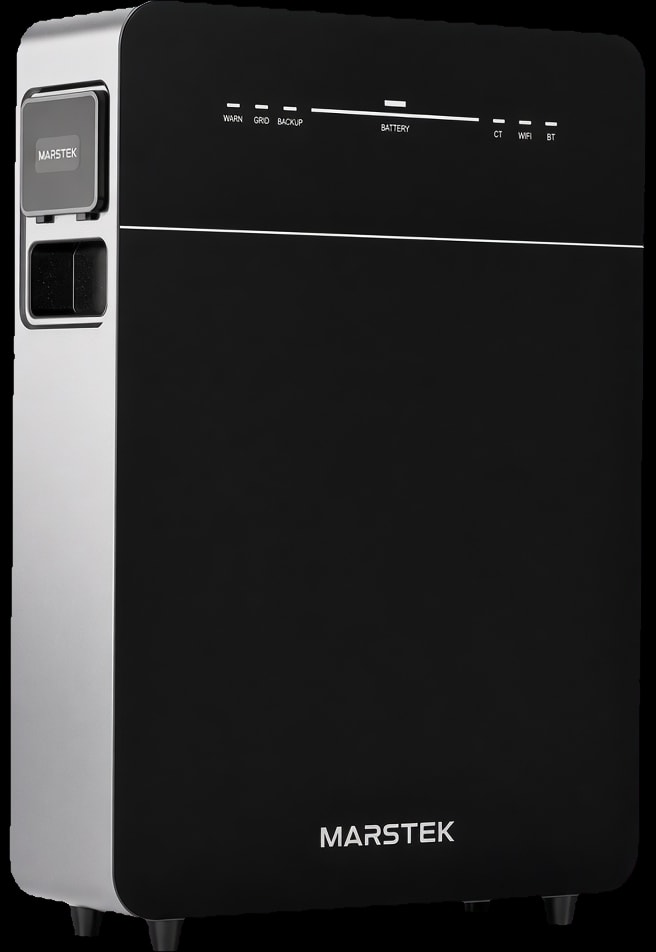 You want it in a socket
Marstek Venus E 3.0
Plug-and-play with socket and P1 meter.
- Capacity range: 5.12 kWh
- Charge power: up to 2,500 W (charge)
- Indoor / outdoor (IP65)
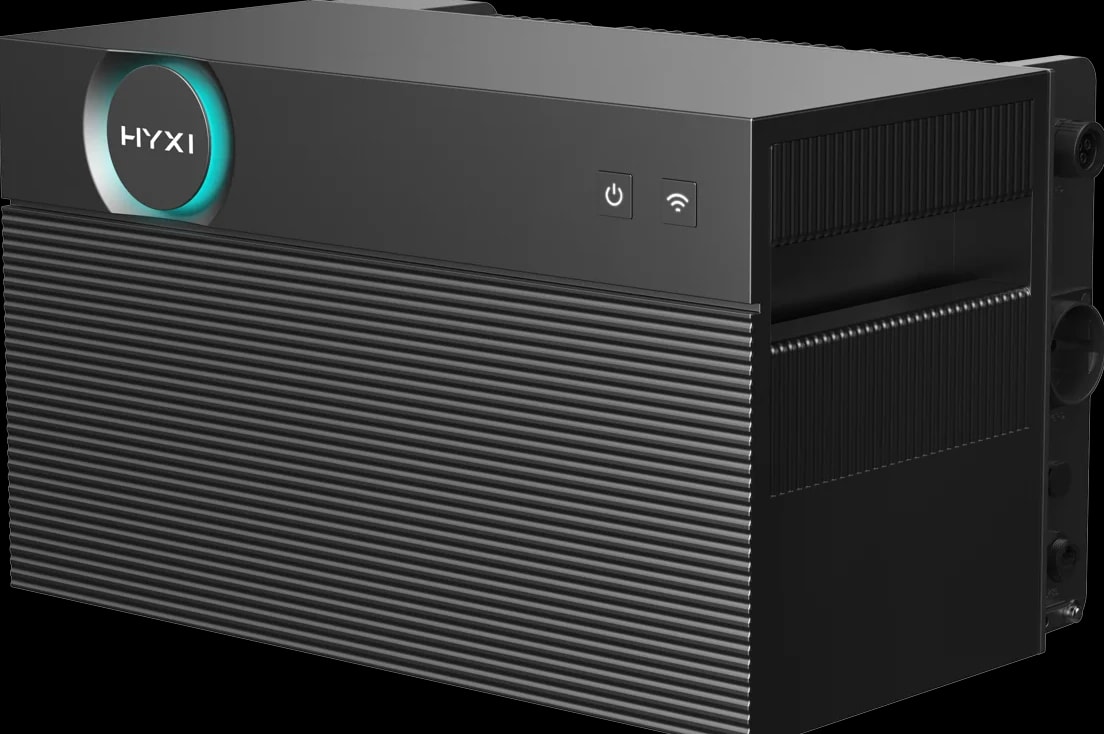 You want to add more later
Hyxi Halo
Modular and expandable for the future.
- Capacity range: 3-18 kWh
- Charge power: 1,500-3,000 W (charge)
- Indoor / outdoor (IP66)
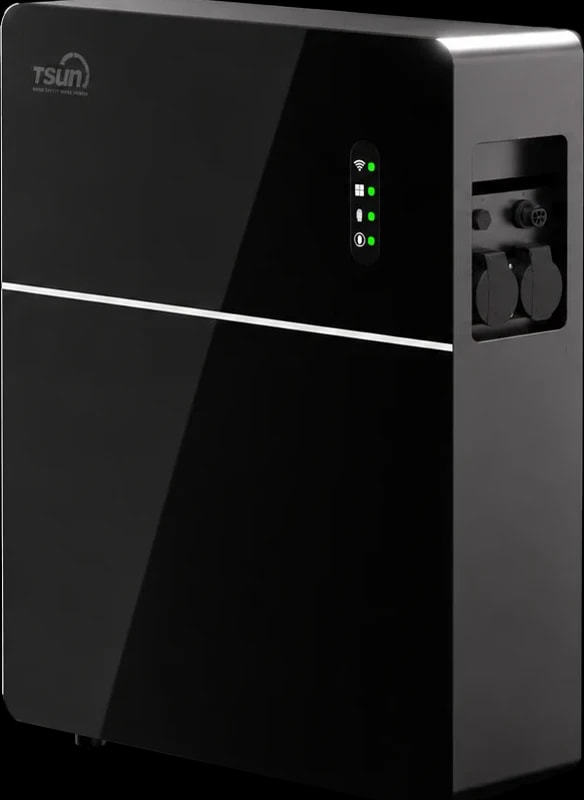 You want one compact unit
TSUN PowerTrunk
All-in-one cabinet system.
- Capacity range: 5.12-20.48 kWh
- Charge power: up to 2,500 W (charge)
- Indoor / outdoor (IP65)
 You need space outside
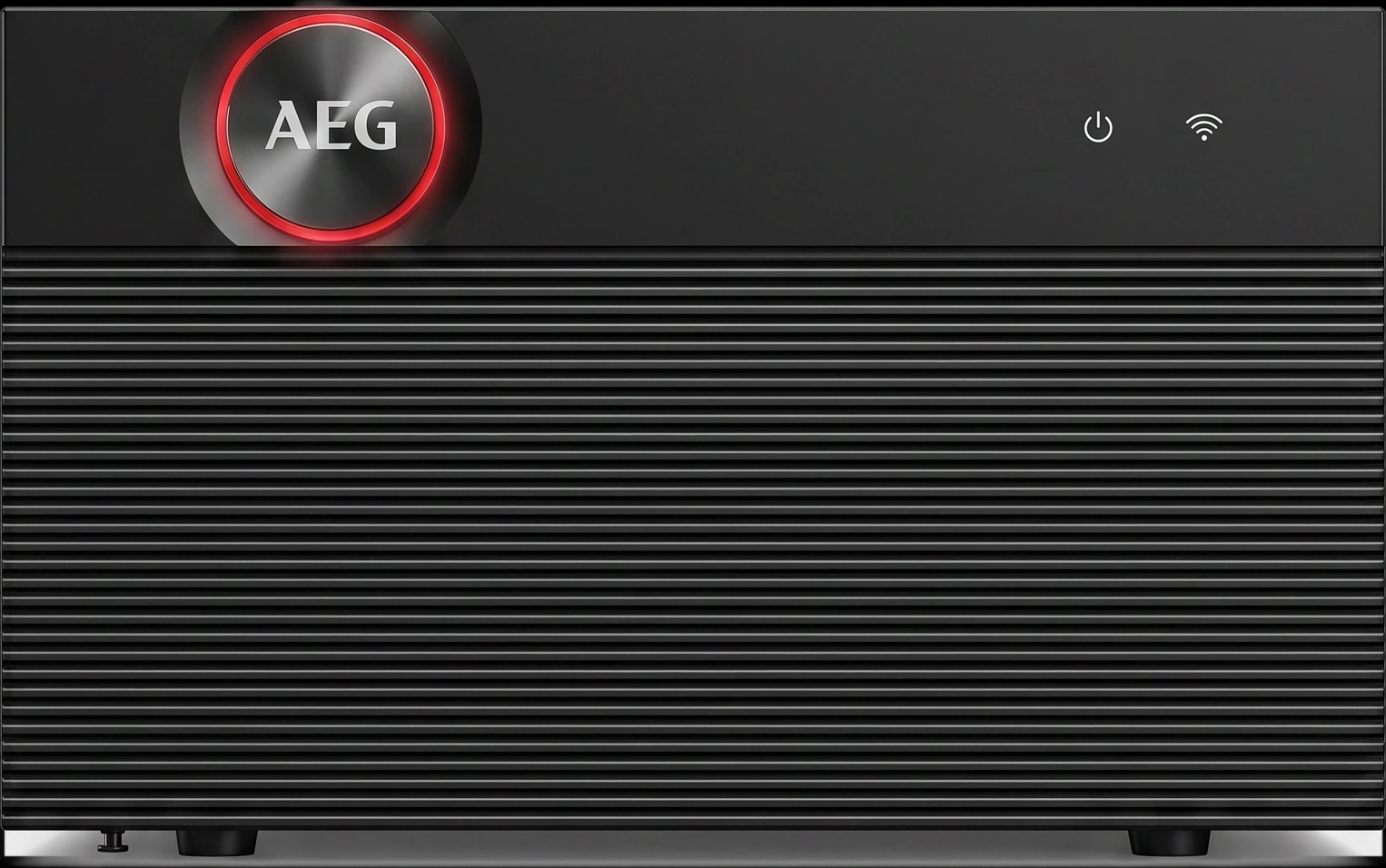
AEG Solarcube
Two modules, IP66
- Capacity range: 6.0 kWh
- Charge power: up to 3,000 W (charge)
- Indoor / outdoor (IP66)
Common questions
Quick answers to questions about home batteries.
How long does a home battery last?
For the LFP models in this shop the datasheets typically list 6,000 to 10,000 cycles or more. Warranty differs by brand and model and is listed with the product.
Can I install it myself?
Most batteries in this shop are plug-and-play and meant to be connected following that brand's manual. What the manual of your model requires is listed with the product. You need an electrician if the manual asks for a dedicated circuit or a fixed connection.
Do I still need the grid?
Yes. A home battery stores surplus solar for later use. It does not take your house off-grid, unless that model lists backup or off-grid power in the specs.
Does a home battery work during a power cut?
It depends on the model. The Marstek Venus E 3.0 gives 2,500 W of continuous backup power, through a separate BACKUP connection where you plug in the appliances that must keep running. The TSUN PowerTrunk switches over in 10 ms and delivers up to 2,500 W. The AEG Solarcube delivers up to 3,000 W off-grid. That does not give your home its own power grid by default: what you connect has to stay within that power. The figures come from the manufacturers' specs. For other models the backup power is on the product page.
Which battery is right for me?
Start with how you want to connect, how much space you have, and whether you want to grow later. The four types above give a first direction. Stuck between two? Open the product pages, or send us a message.